
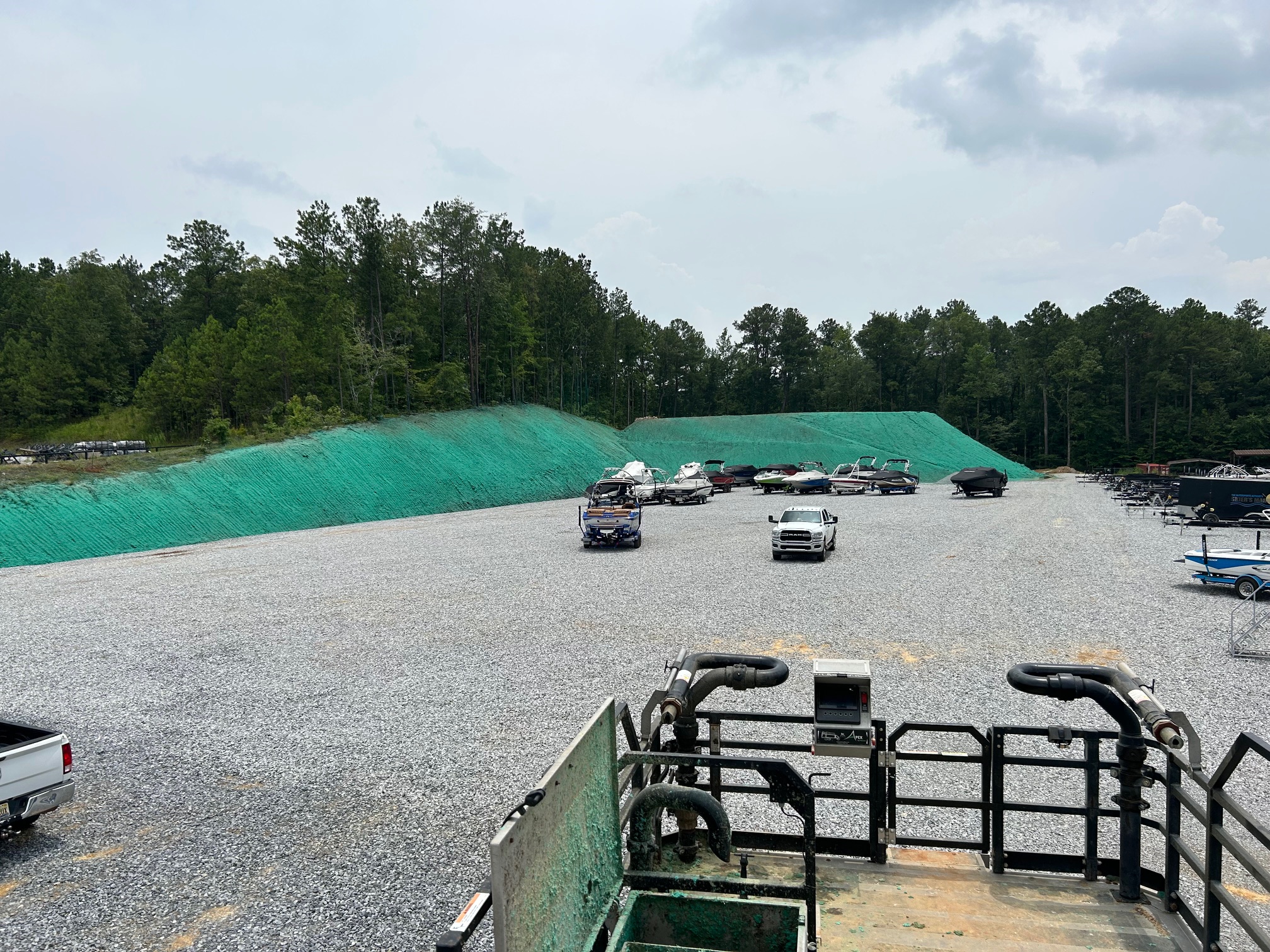
Hydroseeding in Alabama is a popular way to grow grass quickly for solar farms, commercial areas and residential areas. Hydroseeding in Alabama also controls soil erosion, preventing damage to your property and land.
This environmentally friendly solution for erosion control in Alabama is important, but it can come with a lot of questions if you are unfamiliar with the process. So, here are some of the most common questions about hydroseeding in Alabama.
How Does Hydroseeding Prevent Erosion in Alabama?
Hydroseeding prevents soil erosion in Alabama by quickly covering bare soil with a hydroseeding “slurry,” which consists of mulch, seed, fertilizer and water. This hydroseeding slurry fosters rapid grass growth in all kinds of soil areas, including for residential areas, solar farms, job sites and more.
As the grass grows, its root system anchors into the soil and holds it in place. This combination of immediate coverage and deep root growth makes hydroseeding an effective long-term solution for erosion control on residential, commercial, and construction properties in Alabama.
How Long Does Hydroseeding Take to Be Effective for Erosion Control?
Hydroseeding in Alabama to prevent erosion control on land and farms can take between 4 and 6 weeks for the full growth of grass to be completed. The hydroseeding starts with the slurry being placed onto the land, covering the soil like a blanket. After about a week, grass will begin to sprout. However, it is not until the 4-6 week range that roots will fully develop in the Alabama soil.
The hydroseeding timeline can also depend on outside factors, including weather conditions, seasonality, soil quality, and water control. While the conditions of the area being hydroseeded can have an impact on the hydroseeding timeline, hydroseeding is proven to be effective at controlling erosion in Alabama in all kinds of environmental conditions.
What is the Best Time for Hydroseeding in Alabama?
Typically, the best seasons for hydroseeding in Alabama are in the fall and spring. However, you can also hydroseed during the winter and summer months, both for growing new grass and for overseeding existing grass to strengthen it.
Fall and spring are typically the best months for hydroseeding in Alabama because of the mild weather conditions, including temperatures and rainfall that are recorded in these months. This is why these seasons are the most common for hydroseeding in Alabama, both for commercial and residential areas.
How Much Does Hydroseeding in Alabama Cost?
Hydroseeding in Alabama is a cost-effective solution to erosion, and is cheaper than physically laying sod on expansive commercial or residential areas. Total hydroseeding costs depend on land size, but are almost always cheaper than other alternatives like sodding, which makes hydroseeding a great way to prevent erosion on any of your properties without breaking the bank.
Hydroseeding with Burns Environmental in Alabama
Looking for solutions to soil erosion in Alabama? Contact us today to speak to one of our experts and learn more about our erosion control services. We’ll be happy to answer questions about hydroseeding in Alabama and how we can help you with your next environmental project, including solar farms, commercial job sites, and residential projects!