
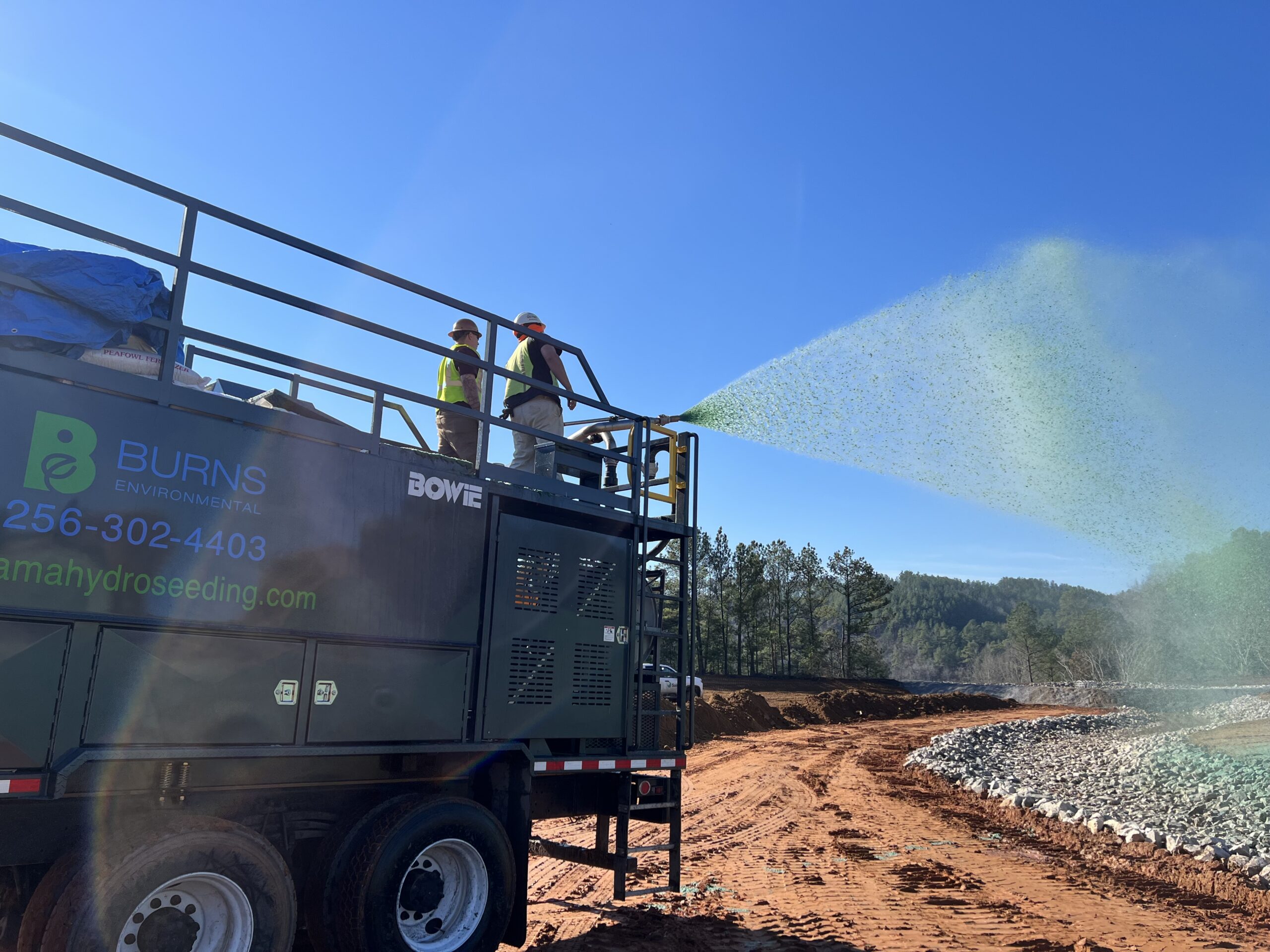
It’s been a rainy summer here in Alabama. For Alabama solar farm managers, that has meant the threat of soil erosion at their solar plants. When heavy rains fall on unprotected soil, the risk for soil loss dramatically increases. This is why it’s so important for solar farms in Alabama to invest in erosion control this fall. Hydroseeding has proven to be one of the most effective methods of erosion control for solar plants in Alabama, which is why it’s such a common choice.
Here’s how hydroseeding for erosion control protects solar plants in Alabama.
Why Fall Is the Right Time to Address Solar Farm Erosion Control
Once vegetation is cleared to make way for panel arrays, racking systems, and access roads, the ground is left bare and unprotected. Alabama’s fall weather pattern, which is punctuated by cold fronts and heavy rain events, can threaten to wash away topsoil in a matter of hours if it isn’t stabilized. Storm runoff from unprotected soil at solar plants in Alabama can also carry sediment into nearby streams and waterways, leading to NPDES violations and fines.
In Alabama specifically, fall is the right time to hydroseed for erosion control on solar plants for multiple reasons. Left unaddressed, erosion can undermine panel foundations, clog drainage systems, and create long-term maintenance headaches that eat into a project’s return on investment. By using commercial hydroseeding for solar plants in Alabama, you can ensure that the entire plant is more protected from the weather patterns that could otherwise damage the plant.
How Hydroseeding at Solar Plants Solves the Erosion Problem
Hydroseeding for solar plants in Alabama works by applying a hydroseeding slurry, consisting of seed, mulch, fertilizer and water. The slurry sticks to the ground, and grass growth begins. As the network of grass roots expands, it holds soil in place while grass continues to sprout and grow thicker.
Unlike traditional seeding methods, hydroseeding covers large, irregular areas quickly and evenly, which is exactly what’s needed across sprawling solar sites with uneven terrain, drainage channels, and buffer zones. Oftentimes, hydroseeding at solar plants in Alabama results in lasting grass growth in just a few weeks.
Beyond speed, hydroseeding offers a few key advantages for solar developers:
- Rapid stabilization: Germination begins quickly, securing the soil at Alabama solar plants quicker than traditional seeding.
- Cost efficiency: Hydroseeding for solar plants in Alabama is significantly less expensive than sod and requires less labor than traditional seed-and-straw methods.
- Regulatory compliance: Establishing vegetative cover helps meet NPDES stormwater permit requirements and reduces the risk of sediment discharge violations for solar plants in Alabama.
- Long-term effectiveness: While maintaining a perfect layer of turf requires upkeep, a properly established layer of grass from hydroseeding continues protecting the soil at solar plants in Alabama for a long time.
A Full-Service Approach to Erosion Control
Burns Environmental has spent years providing hydroseeding, silt fencing, stormwater management and other environmental services for Alabama and Georgia construction sites, including solar plants of every size. Our industry knowledge and capabilities make us a great erosion control and environmental partner for solar plants in Alabama and Georgia.
Burns Environmental: Protecting Your Alabama Solar Plant This Fall
Fall’s unpredictable weather makes now the right time to shore up your solar plant’s protection from soil erosion. Hydroseeding offers a fast, affordable, and proven path to erosion control for solar plants in Alabama, and we’d love to help you at yours.
Contact us at Burns Environmental today for a free quote on our hydroseeding services for Alabama solar plants, and ensure your solar plant is protected this fall.